Your SMEs Aren’t Bad at Explaining
Subject matter experts get a bad rap.
They’re “hard to work with.” They “can’t explain things simply.” They “don’t understand the audience.”
The problem is you’re asking experts to be novices.
A cardiologist who's spent 20 years mastering their field is uncomfortable stripping away the context and precision that makes their work correct.
A research scientist who says "just read the paper" has trained for a decade to write for peers, and now you're asking them to write for parents who just heard a terrifying diagnosis.
When experts use jargon, add nuance, and insist on specificity, that’s them using their tools. And when you ask them to “simplify” without giving them new tools, reassurance, or a framework to do it safely, they often shut down.
Here’s the truth: Your SMEs are novices at translation, public engagement, and audience adaptation. Just like you’re a novice in their field. The solution is to meet them where they are and guide them through the process so everyone walks away feeling good about the contribution. Here’s how.
KEY INSIGHT
Stop asking your subject matter experts to simplify.
Start creating the conditions where they can share expertise confidently, knowing you'll handle the translation layer.
What’s Changing
Organizations are under pressure to extract and scale expertise faster than ever.
The traditional model where the expert delivers everything themselves, simply doesn’t scale. You need train-the-trainer programs, reusable content, patient education materials, and onboarding systems that work without your SME in the room every time.
But if you sit down with a subject matter expert to extract their knowledge, the conversation may go sideways. The default assumption is often - “This expert is bad at communication.”
The reality is: This expert is being asked to translate their expertise for an audience they don’t know, using a communication style they may not have practiced, while worrying that simplification will lead to misinformation.
Why This Matters
When SME sessions fail, the consequences ripple.
For the organization:
Projects stall because no one can turn the interview into usable content
Review cycles multiply because the expert keeps flagging inaccuracies
Training programs get built with gaps because the learning designer couldn't extract the tacit knowledge
For the expert:
They feel misunderstood ("They didn't listen to anything I said")
They lose trust in the process ("They're going to dumb this down and get it wrong")
They disengage from future requests ("Last time was a waste of my time")
For the audience (patients, learners, staff):
Content is either too technical to understand or too simplified to be useful
Training doesn't teach application, just memorization
People can't transfer knowledge to real situations
The Opportunity Cost is Massive
Every failed SME session is expertise that stays locked in one person’s head instead of scaling across your organization.
My perspective
Here's what I've learned working with scientists, clinicians, and technical experts across healthcare, life sciences, and education:
SMEs aren't bad at explaining. They're experts being asked to be novices.
They're novices at:
Translation (turning technical language into plain language without losing accuracy)
Audience adaptation (adjusting explanations for different knowledge levels)
Public engagement (making information compelling, not just correct)
And that's okay. That's not their job. Their job is to be the expert.
Your job — as the learning designer, the content strategist, the producer, the communicator — is to guide them through the translation process. Not to extract information like you're mining for gold. But to create the conditions where they can share expertise confidently, knowing you'll handle the translation layer.
Here’s the Shift
Instead of: "Can you explain this in simpler terms?"
Try: "I'm going to help you translate this. Let's start with what people always misunderstand."
Instead of: "The audience won't understand that jargon."
Try: "What context do people need before this term makes sense?"
Instead of: "Can you just give me the highlights?"
Try: "Walk me through your thinking process. I'll pull out what matters most for this audience."
The goal isn't to make SMEs better communicators. The goal is to make yourself a better guide.
How to Work with SMEs: Real Examples
Example 1: Setting the Stage for a Pediatric Cardiologist
I was working on a podcast episode about a new intervention for kids with congenital heart defects. The researcher was brilliant, but based on the pre-interview, many of the responses from the expert assumed an understanding of valves, pressures, and surgical anatomy.
What worked:
I reframed the session before we even started on recording day:
"Here's who's listening: parents whose child just got this diagnosis. They're scared. They're Googling everything. They don't have a medical degree, but they're trying to become experts overnight. Your job isn't to teach them cardiology — it's to help them understand enough to feel informed at their next appointment. I'll handle the translation. You make sure I don't get it wrong."
That shifted everything. The expert stopped worrying about dumbing it down.They talked about what parents ask, what they always misunderstand, what they wanted them to know before the first visit.
The result: One of the most-shared episodes in the series.
The lesson: SMEs need to know the stakes, the audience, and that you're the safety net. Once they trust you'll preserve accuracy, they relax.
Example 2: Using Storytelling to Set the Stage for SMEs
I was designing train-the-trainer content for computer science professionals who would be working in K-12 classrooms alongside teachers. These were engineers, developers, data scientists volunteering their time.
The challenge wasn't just teaching them how to support teachers. It was getting them to understand why the translation layer mattered — why you can't walk into a 9th grade classroom and talk about algorithms the same way you'd talk about them in a sprint planning meeting.
What worked:
I let someone who'd lived it do the talking.
Prior to training, I reached out to a teacher who'd been part of the program the year before. During the training, I played the interview and she told her story:
"The first time our volunteer came in, he started talking about technical terms I’d never heard and I had no idea what he meant. My students looked lost. But then he paused and said, 'Okay, let me back up — have you ever played a game where you had to try something over and over until you figured out the pattern?' Suddenly, the kids lit up. That's when I realized — he wasn't dumbing it down. He was translating. And once he did, I could repeat it in my own classroom."
The shift:
The CS professional stopped defending their language and started asking, "What else do teachers need us to translate?"
The result:
They went into classrooms prepared to meet teachers where they were — not because I told them to, but because they heard from someone who'd been on the receiving end of both good and bad translation.
The lesson:
Sometimes the best way to help an SME understand the audience is to let the audience speak for themselves. Storytelling isn't just for the final content. It can be a tool for setting the stage with your SME before you even start extracting expertise.
How to Apply This
If you work with SMEs to build content, training, or communication materials, here's what this means:
Set the stage before you start. Before the interview, the meeting, or the content session, tell your SME:
Who the audience is (and what they already know)
What you're trying to help them do (make a decision, apply a skill, feel informed)
Your role (translator, not transcriber — you'll handle accessibility, they handle accuracy)
The safety net (they'll review everything before it goes out)
This removes the fear. They're not being asked to simplify on the fly. They're being asked to share expertise with a guide who'll translate.
Ask the right questions.
Don't ask: "Can you explain this?"
Ask: "What do people always get wrong about this?"
Don't ask: "Can you simplify that?"
Ask: "What context does someone need before this makes sense?"
Don't ask: "What's the most important thing?"
Ask: "When someone learns this and then tries to do it, where do they get stuck?"
The shift: You're not asking them to communicate. You're asking them to share expertise. Then you do the communicating.
Remind them they're experts (and that's good).
When an SME says, "I'm probably overcomplicating this," don't agree.
Say: "No, you're being precise. That's your job. My job is to figure out how much of this precision the audience needs. Let's start with the full picture, and I'll help you decide what to keep."
SMEs need permission to be experts. When they feel like they're doing it wrong, they shut down. When they feel like you value their expertise and you're just helping translate it, they open up.
Close the loop.
After you've built the content, bring it back to them and say:
"Here's what I built from our conversation. Did I get it right? Is there anything that would make a colleague cringe?"
Not: "Is this okay?"
But: "Does this preserve what matters?"
This keeps them engaged. It reassures them you didn't butcher their work. And it gives them a clear, bounded review task (accuracy check, not rewrite).
What to Try Next
Before your next SME session, try this:
Tell them who the audience is and what you're trying to help them do
Remind them you're the translator — they handle accuracy, you handle accessibility
Ask about failures and misunderstandings, not just explanations
Close the loop by bringing content back for an accuracy check
Work With Me
If you're building programs that depend on SME expertise:
I've spent years working with scientists, clinicians, and technical experts to extract and translate knowledge for diverse audiences from families navigating pediatric diagnoses to teachers scaling computer science education.
I speak PhD Scientist, Public Engagement Specialist, and Learning Designer. If you're building clinical training, patient education, or research communication programs where SME collaboration is the bottleneck, let's talk.
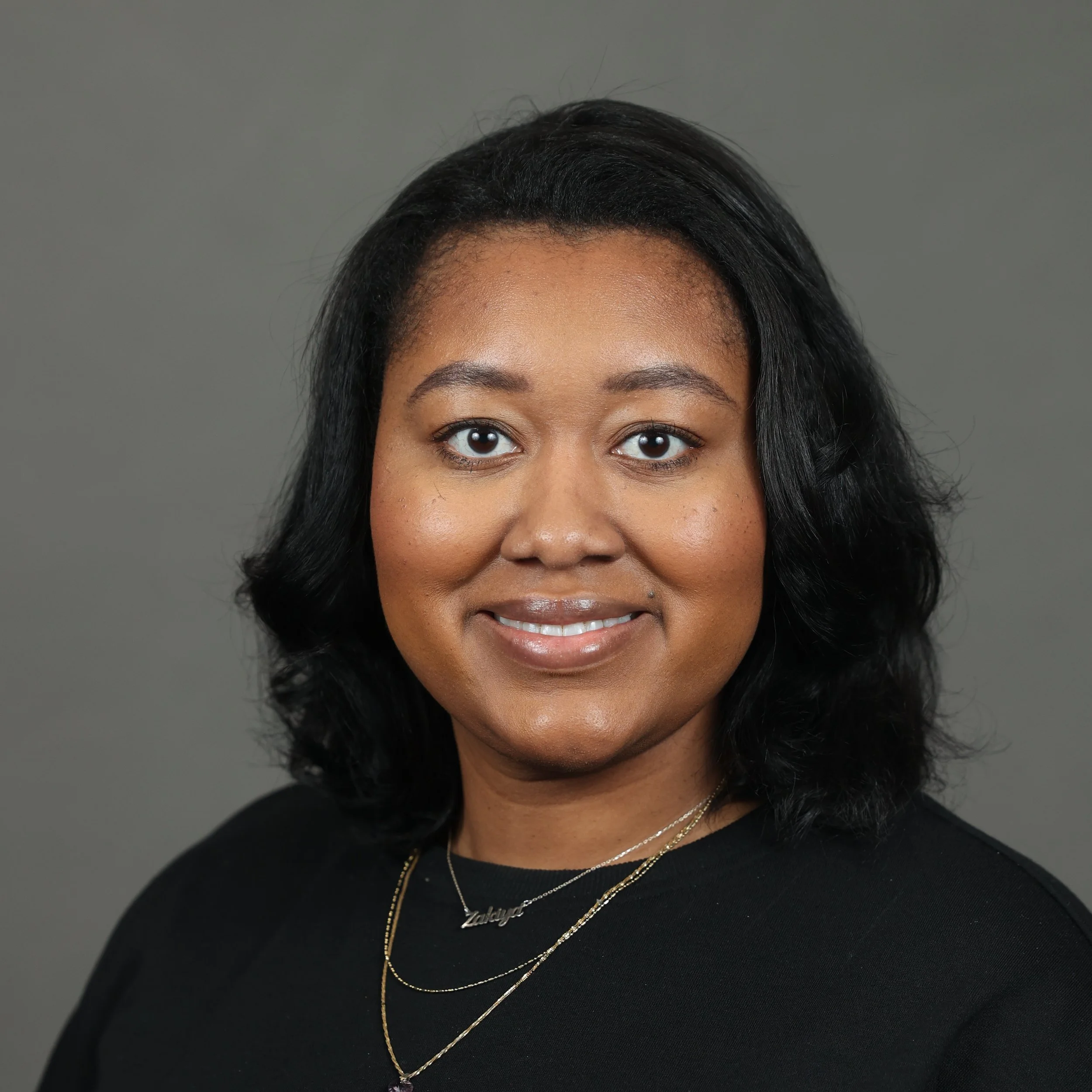
Zakiya Whatley, PhD
Director, Learning & Communication